Arriving Open
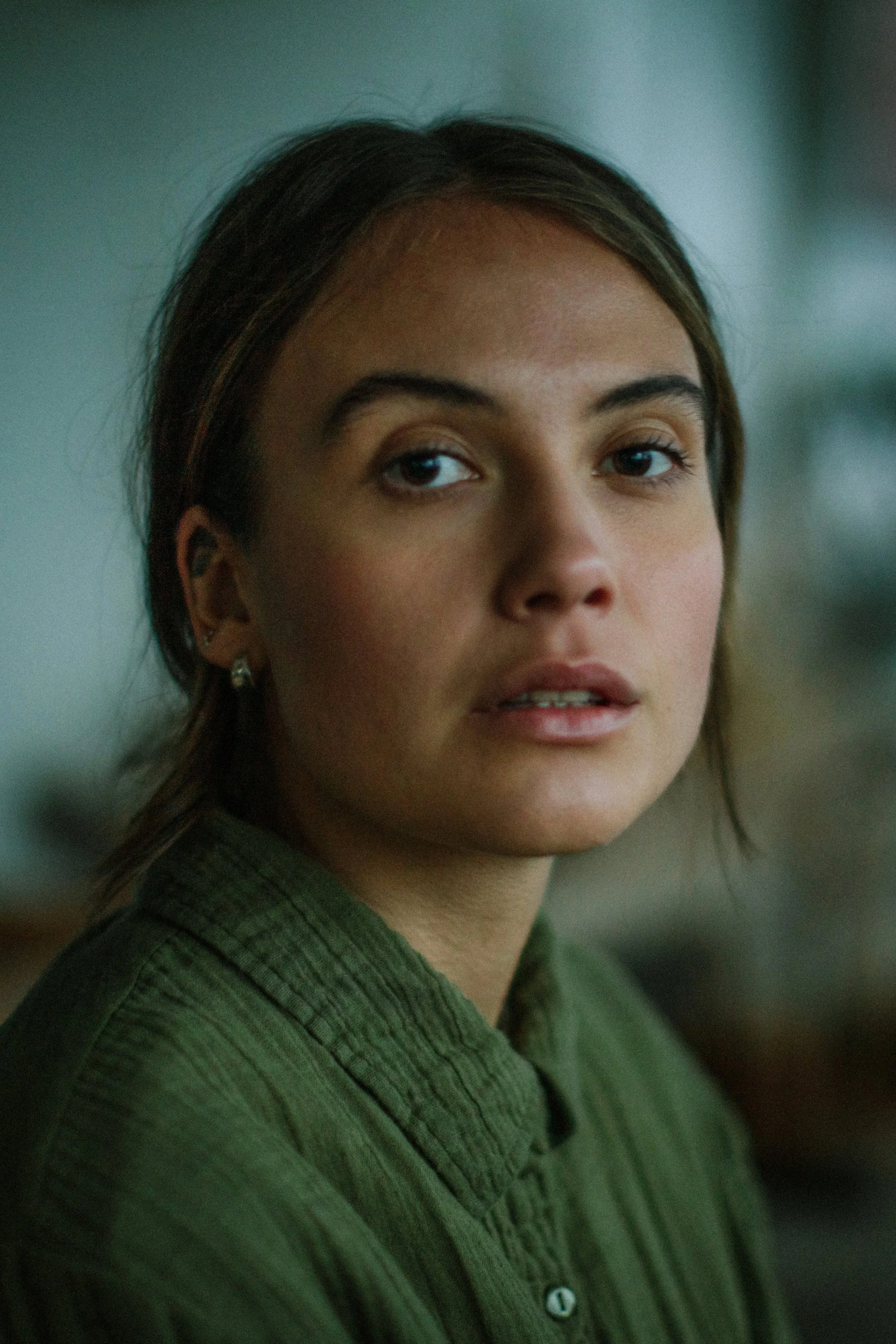
A portrait is not a photograph of someone. It's a photograph of the space between two people.
What appears in that space depends almost entirely on what happens before the shutter is pressed.
Portrait photography asks something specific of both sides. The photographer has to earn the right to be there, to move past the surface version a person presents to a camera and into something more true. The subject has to be willing to let that happen, which requires a kind of trust that doesn't arrive on demand. Both of those things take time. More time than most situations allow.
I was reminded of this recently on a shoot. We'd built a considered environment for a series of interviews, a large set with multiple elements and a specifically built art installation as the background. Some of the clients wandered on set to take a look, which is completely natural, and inevitably a couple wanted to use the moment for a quick headshot. Hard to refuse. The light is there, the camera is there, it feels like an opportunity.
But it rarely works. The set is busy, the atmosphere is wrong, the person in front of the camera knows they have two minutes before someone needs the space back. There's no time to settle, no time to finesse, no room for the kind of patience the work actually needs. The results are technically fine and humanly absent. Flat in a way that's hard to articulate but impossible to miss. And then comes the harder part, sharing those images with the subject, knowing they don't represent them well, knowing the conditions weren't right, knowing the outcome was compromised before it began.
That experience is the opposite of what portrait photography at its best can be.
Before a shoot, the most useful thing a portrait photographer can do is let go of any fixed idea of what the photograph should look like. Arrive with a plan already decided and you stop noticing what's actually there. The subject knows more about who they are than the photographer ever will. The job is just to make space for that to come through.
That means arriving open. Curious about the person rather than focused on the picture. Asking not how to get a good photograph but what you might learn from this particular individual on this particular day. That shift in orientation changes everything about how a session unfolds.
When the conditions are right, something different becomes possible. A portrait session with enough time and enough quiet allows both people to settle into it. The photographer can observe, wait, adjust. The subject can stop performing for the camera and start existing alongside it. That shift, from performing to existing, is where the interesting photographs live.
Naturalness is the goal and the hardest thing to achieve. People arrive with a version of themselves they think the camera wants. It takes time to move past that. Time for the conversation to become natural, for the self-consciousness to ease, for something unguarded to surface. You can't rush it. Trying to rush it produces exactly what a rushed headshot on a film set produces. A record of someone trying to look like themselves rather than actually being themselves.
The best portraits tend to happen in the in-between moments. Not the held pose but the breath before it. Not the smile that was asked for but the one that arrived for a different reason. Those moments can't be engineered. They can only be created for, by building the kind of environment and the kind of relationship where they're possible.
That's the real work of portrait photography. Not the technical decisions, though those matter. Not the lighting or the lens, though those matter too. But the human work of making someone feel safe enough to be seen.
When that happens, what the camera holds is something no headshot on a busy set could ever produce.