Photography as a Way of Noticing
Photography relies on time, not in a technical sense, but in how much space you give yourself to really look.
Space to arrive. To pay attention. To let moments take shape. When that space disappears, noticing tends to go with it. And when noticing goes, the work often becomes strained, reactive, and harder than it needs to be.
This applies whether you’re working on a personal project or a commercial shoot.
Some of the most meaningful images tend to happen between the shots. Not the moments you plan for, but the ones that surface when nothing is being pushed forward. When the camera stays up a little longer. When you stop chasing a result and allow things to unfold.
That kind of noticing depends on having enough room to breathe. When that room is taken away, stress often fills the gap. Stress narrows attention and encourages speed over sensitivity. Rarely does it lead to work that feels considered or alive.
On location, especially when working with available light, this becomes obvious very quickly. Light doesn’t follow schedules or shot lists. It shifts, softens, disappears, and sometimes surprises you. Trying to rush that process usually creates tension, both in the work and on set. You feel it straight away, and the images start to reflect that pressure.
This is why protecting small pockets of time has become an important part of how I work. A few minutes to pause. To observe how a space behaves. To notice how people move through it, or how the light settles once you stop trying to control it. Those moments are often where the work opens up.
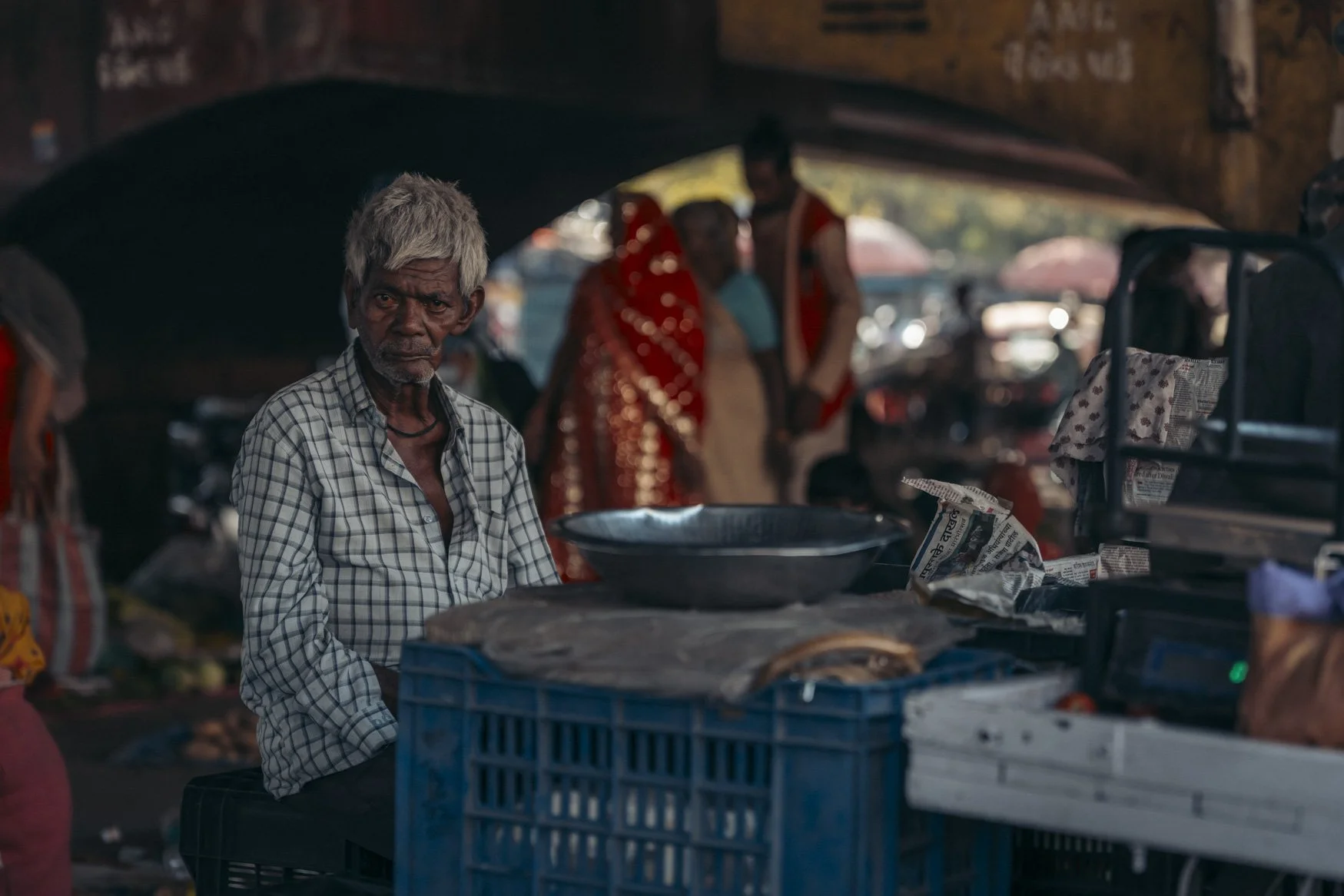
Last month, while on a corporate documentary shoot in Ahmedabad, India, part of the brief was to make a set of editorial photographs of the local community. I asked to be taken to a vegetable and spice market and spent a couple of hours walking, watching, and photographing what I encountered.
Nothing was rushed. There was no attempt to cover everything. People noticed the camera, then carried on. Sometimes they called me over to be included in the frame, and I ended up making some of my favourite candid portraits that way. Gestures repeated. Conversations unfolded. Light moved through narrow streets and between stalls. The photographs that emerged came from staying long enough for moments to present themselves.
That experience reinforced something I’ve learned repeatedly. When you allow time for noticing, the work often gives more back. The camera becomes less about extraction and more about response. You stop forcing images and start recognising when something is already happening.
Photography, practiced this way, becomes a discipline of attention. A reminder that some of the most meaningful images live between the shots, and that giving yourself enough space to really see is often the most important decision you can make.