So You Want to Work in Film and Photography
I met a fashion and media student in a shop last Friday.
He was serving behind the counter. He'd clocked the camera bag. We got talking. He's into filmmaking and photography, somewhere in the middle of his degree, trying to work out what comes next. Part worried, part excited. Mostly just not sure.
I recognised that feeling immediately. I'm still not entirely free of it.
We talked for a while. He asked questions I didn't have clean answers to. What does the industry actually look like when you get there. How do you build something sustainable. Whether the things he loves about the work now will survive contact with the reality of doing it professionally.
I told him what I actually think, which is that I don't know how it's going to look for him. Nobody does. The landscape keeps shifting, the tools keep changing, and the careers that make sense right now might look completely different in five years. The role AI will play is probably the biggest unknown of all. Nobody knows exactly what it means yet for people working in photography and film. The honest answer is that some things will change significantly and others won't. The human side of the work, the presence, the relationships, the ability to earn trust and tell stories that feel true, those things matter more in a world where the technical side becomes increasingly automated, not less. But it's a legitimate thing to be uncertain about, and anyone who tells you they have it figured out is probably overstating their confidence.
That's not a comfortable thing to say to someone at the beginning. But I think it's more useful than pretending there's a clear path.
What I do know, from being further along the road, is a few things that seem to hold regardless of how the industry changes.
The work you make before anyone is paying attention matters more than it might seem. Not because it builds a portfolio, though it does that too. But because it's where you find out what you actually care about, before external pressure starts shaping your choices. The instincts you develop making things for no audience and no brief tend to be the most honest ones you'll ever have. They're worth protecting.
Uncertainty doesn't go away. That's probably the thing I most wished someone had told me early on. You don't reach a point where things feel stable and settled and clear. The questions change shape but they don't disappear. What changes is your relationship to them. You get better at sitting with not knowing. At continuing to work through it rather than waiting for it to resolve before you begin.
The industry is hard and it's competitive and it doesn't reward patience in any obvious way. But the people who stay tend to be the ones who kept making things even when it didn't seem to be going anywhere. Not because persistence is a virtue in the abstract, but because the work itself is where the learning happens. You can't think your way into becoming a better filmmaker or photographer. You have to make things, and the making teaches you what nothing else can.
I also told him that the worry and the excitement he's feeling aren't opposites. They're the same thing. The fact that it matters enough to worry about is the reason the excitement is real. That mix, uncomfortable as it is, is actually a good sign.
We didn't solve anything in that conversation. I don't think either of us expected to. But something about it stayed with me, the reminder of what it feels like to be at the beginning of something, before the path has revealed itself, when the future is genuinely open in a way it won't always be.
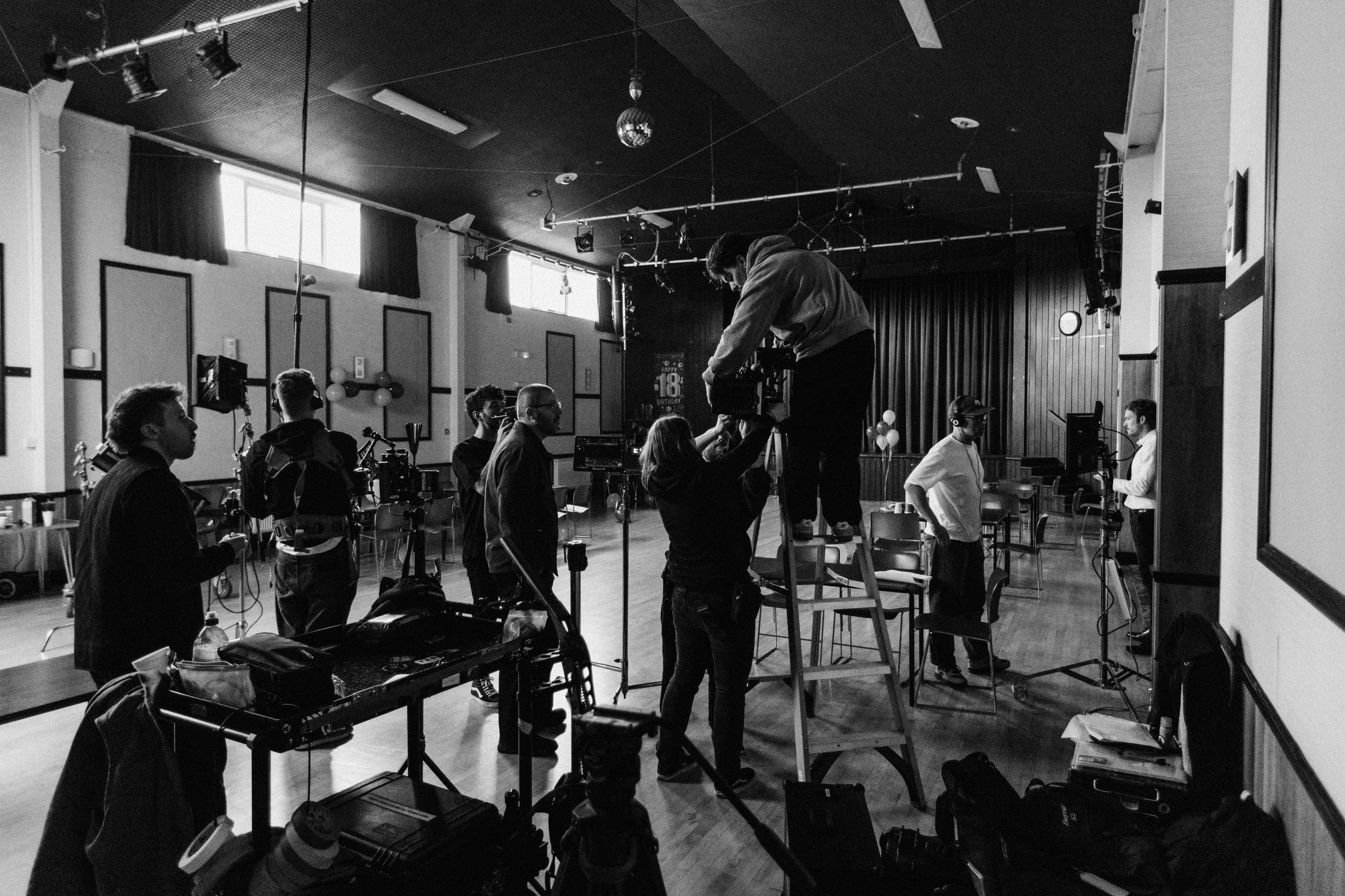
We exchanged details before I left. He'd like to come on one of my projects as a production assistant, to get a feel for life on set. I hope it happens. Those early experiences of being inside the process, of seeing how things actually work rather than imagining it from the outside, tend to be the ones that stay.