Writing What Won’t Leave Me Alone
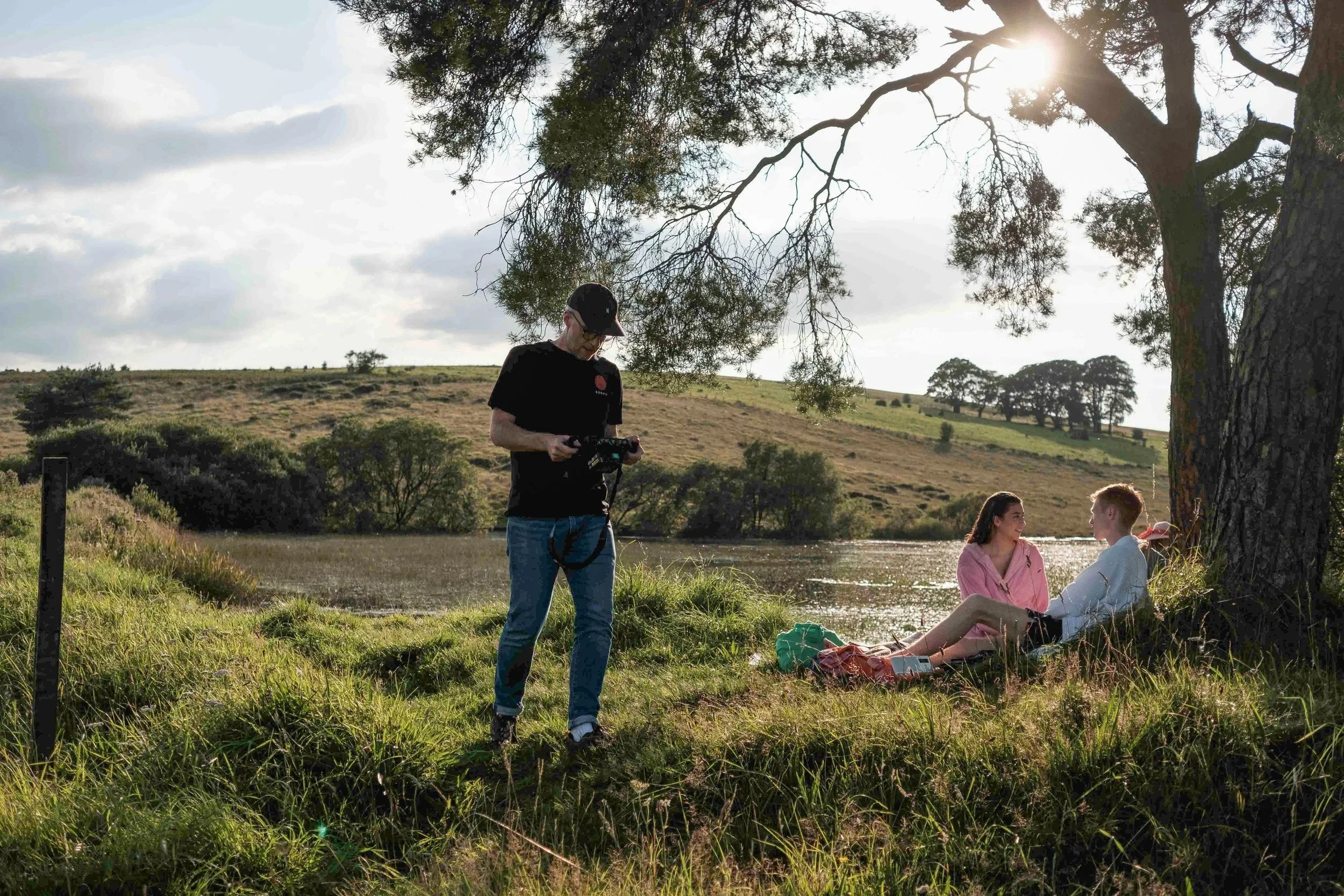
Photo: Dan Hilltout
Looking back at the last few scripts I’ve written, I’ve started to notice a pattern.
They circle similar emotional territory. Anxiety. Masculinity. Identity, and the tension between what is spoken and what is held back. Nostalgia, too, the way memory shapes how we understand ourselves.
I didn’t set out with a strategy to write about these subjects. They weren’t chosen because they were timely or marketable. They returned.
There’s an old piece of advice that gets repeated to writers: write what you know.
It can sound limiting. We can research. We can imagine. We can write far beyond our own lived experience. Some of the strongest stories emerge from curiosity about worlds unfamiliar to the writer.
But knowing doesn’t have to mean autobiography.
It can mean emotional recognition. It can mean tension you’ve observed closely. It can mean dynamics you’ve felt, even if they aren’t identical to the ones on the page.
For me, that advice has acted less like a rule and more like a north star.
One recent script explores body image in women (Unfiltered). It isn’t drawn from personal experience in that sense, but from years of witnessing how pervasive and quiet that struggle can be. How early it starts. How normalised it becomes. Writing it wasn’t about claiming ownership of the subject. It was about exploring something I’ve seen affect people I care about, something that feels culturally present, but often experienced in private.
Another script leans into the tension young men feel as adulthood approaches (Days Like These). Anxiety about the future sits beneath nostalgia for teenage summers that already feel out of reach. The story looks back while moving forward, holding both uncertainty and longing in the same frame.
In Last Song, nostalgia takes centre stage. It echoes the summers of my own teenage years, the intensity of first connections, the way music and memory fuse into something almost untouchable. It isn’t a reconstruction of my life, but it draws from the emotional texture of that time. The way it felt. The way it lingers.
What Light Remains explores masculinity and emotional silence. The pressure on men to perform strength. The difficulty of articulating vulnerability in spaces where it isn’t always modelled.
And in Sunday Nights, the focus shifts to the absence of fathers, literal or emotional, and the space that absence leaves behind. None of these themes are abstract. They’re common, often unspoken currents.
When themes are personal in this way, they’re not confessions. They’re inquiries.
I’m not trying to resolve the questions these scripts raise. I’m not offering answers. I’m interested in creating space for ambiguity, allowing characters to sit with things that don’t neatly conclude.
That approach shapes how these films get made.
The short films are often produced without traditional budgets. People give their time. Equipment is borrowed. Crew step in because they believe in the story. Actors respond because they recognise something truthful in the material.
When everyone works for free, belief becomes the only real currency.
That belief rarely comes from spectacle. It comes from resonance.
Themes that feel close to lived experience travel. Not because they are dramatic, but because they are familiar. Collaborators see themselves in the questions being asked. They bring their own histories, their own interpretations, their own subtleties. The work becomes shared.
There is risk in that.
Writing something that feels near to real experience can leave you wondering whether it’s too close. Whether it exposes more than intended. Whether it will be misunderstood.
But distance doesn’t necessarily make work stronger. Sometimes it just makes it safer.
“Write what you know” doesn’t mean limit yourself to your biography. It means pay attention to what you recognise. To what unsettles you. To what keeps returning when you sit down to begin something new.
Some scripts feel like assignments. Others feel inevitable.
The ones that won’t leave you alone are usually the ones worth writing.